


Oculomotor and facial patterns in video monologues: associations with content characteristics and speech rate

The project aims to automate the analysis of nonverbal behavior in public video monologues: gaze metrics (vertical/horizontal) and blink rate, synchronized with the transcript by timecodes at the level of speech segments. The study examines the relationship of these indicators with the characteristics of the content of the utterances (temporal orientation, modality) with the control of the pace of speech. The result is a reproducible pipeline of multimodal analysis and empirical estimates of the associations between speech parameters and nonverbal markers.
Social network. Social networks of people and mental disorders
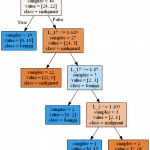
project in collaboration with – Dept. of Psychosomatic Medicine and Psychotherapy University of Tuebingen, 2010
 |
 |
Reconfiguration of Shared Narratives in Ukrainian Wartime YouTube Discourse Before and After the Full-Scale Invasion: Relative Prevalence and Network Characteristics
The aim is to analyze the reconfiguration of shared narratives in Ukrainian YouTube discourse before and after February 24, 2022. The study aims to examine the relative prevalence and network organization of narratives of resistance, capability, exhaustion, and concession, as well as to test the assumption that the onset of a full-scale invasion was associated with a change in the structure of shared meanings in public digital discourse.
Online Help-Seeking for Psychological and Psychotherapeutic Assistance in Ukraine: A Google Trends Analysis (2018–2025)
This study analyzing Google Trends data on help-seeking for psychological and psychotherapeutic assistance in Ukraine and 20 other countries (2018–2025). Primary focus: temporal dynamics after February 2022 and trends in evidence-based treatment searches.
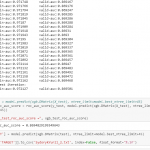
KyivStar Competetion
Yurii Sydoryk
Lecture:
Technologies of artificial intelligence and their use in psychological research
https://www.youtube.com/watch?v=FT_ywEc6Kus&feature=youtu.be