Oculomotor and facial patterns in video monologues: associations with content characteristics and speech rate

The project is aimed at automated analysis of non-verbal behavior in public video monologues: gaze metrics (vertical/horizontal) and blink rate synchronized with the transcript by timecodes at the level of speech segments. The study examines the relationship of these indicators with the characteristics of the content of utterances (temporal orientation, modality) with the control of speech tempo. The result is a reproducible pipeline of multimodal analysis and empirical estimates of associations between speech parameters and nonverbal markers.


Online Help-Seeking

Online Help-Seeking for Psychological and Psychotherapeutic Assistance in Ukraine: A Google Trends Analysis (2018–2025)

This study analyzing Google Trends data on help-seeking for psychological and psychotherapeutic assistance in Ukraine and 20 other countries (2018–2025). Primary focus: temporal dynamics after February 2022 and trends in evidence-based treatment searches.

Reconfiguration of Shared Narratives

Reconfiguration of Shared Narratives in Ukrainian Wartime YouTube Discourse Before and After the Full-Scale Invasion: Relative Prevalence and Network Characteristics

The aim is to analyze the reconfiguration of shared narratives in Ukrainian YouTube discourse before and after February 24, 2022. The study aims to examine the relative prevalence and network organization of narratives of resistance, capability, exhaustion, and concession, as well as to test the assumption that the onset of a full-scale invasion was associated with a change in the structure of shared meanings in public digital discourse.

Cognitive modeling lab

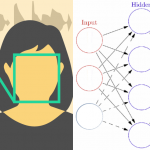
Neural Network Modeling: The use of artificial neural networks for simulating cognitive processes such as perception, attention, and planning contributes to understanding how the brain may function at different levels of organization.

Modeling Individual and Group Behavior: Modeling how individual cognitive processes are shaped and adapted in social groups, especially in the context of collaboration and competition, has great research potential. Using software and artificial intelligence to model the impact of individual and group psychological characteristics and their behavioral correlates on their functioning, achieving various individual and group goals (and embedding them in virtual agents). These models can help create more accurate behavior predictions and be useful for understanding mechanisms of social adaptation, resilience, and experiences of happiness.

Natural Language Processing and Cognitive Linguistics: Creating models for understanding language, text generation, and analyzing human communication based on neural networks. This helps create systems for monitoring social processes, improving human-machine interaction, and modeling speech and understanding processes.

Virtual Reality for Cognitive Modeling: The use of virtual and augmented reality to test cognitive hypotheses in controlled environments. This can be useful for studying traumatic memory, decision-making, social behavior, psychological disorders such as depression, PTSD, or anxiety, and their treatment.


Laboratory Equipment:

  1. Electroencephalography (EEG) – for analyzing brain activity during cognitive tasks.

  2. Virtual Simulation Environments – to create interactive environments for modeling behavioral experiments.

  3. Eye-tracking Systems – to study attention processes, information processing, and decision-making.

cml

Welcome to the Cognitive Modeling  Laboratory!

Cognitive Modelling Lab using methods from artificial intelligence, psychology, biology and cognitive science to develop computational models to generate, simulate and understand intelligent processes and implement them in virtual agents.


Head of Lab:
Yurii Sydoryk


Postal address:

Cognitive Modeling Laboratory
VASYL STEFANYK PRECARPATHIAN NATIONAL UNIVERSITY
57 Shevchenko str.
76018 Ivano-Frankivsk
tel. +38(097) 909-66-44
e-mail: yuriy.sydoryk@pu.if.ua
United State Register code 02125266